
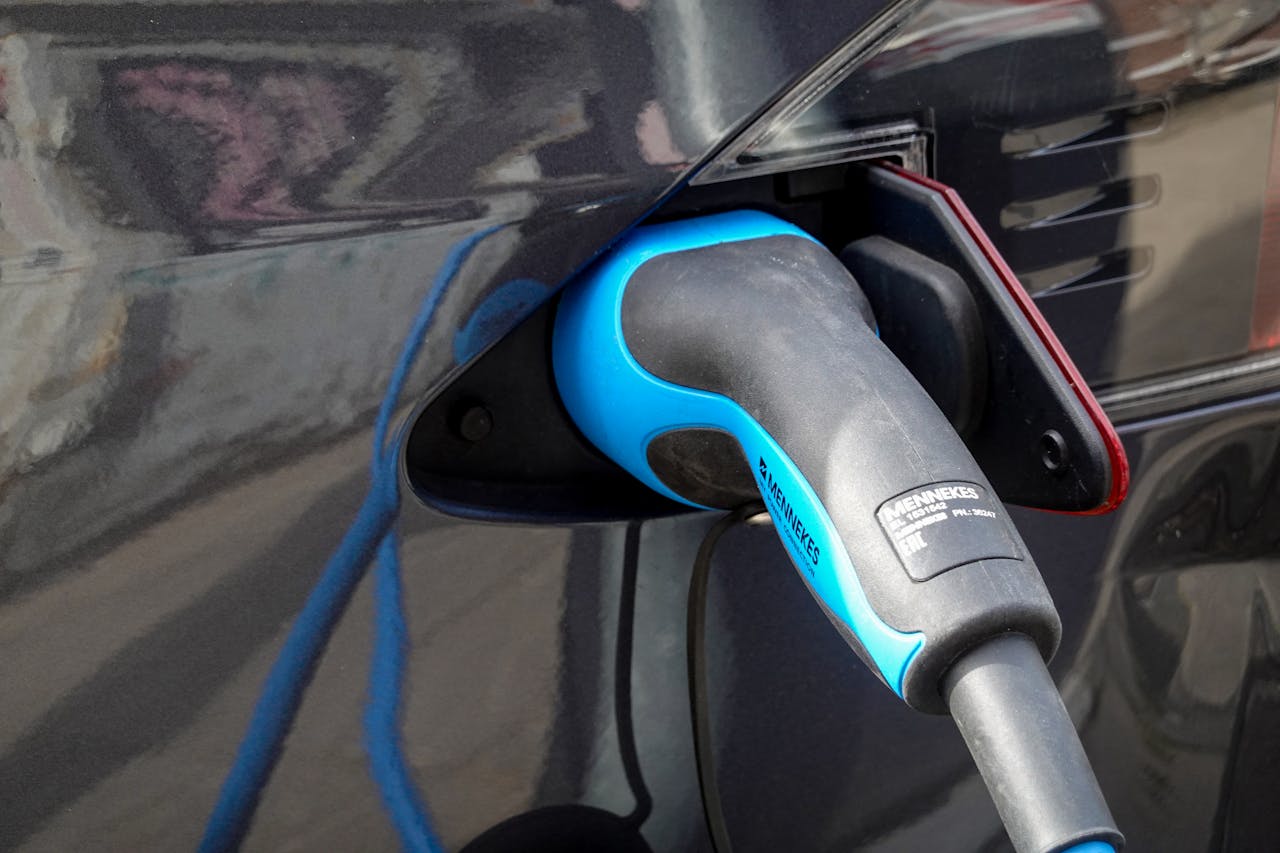
If your company has EV chargers in the parking garage, chances are someone at some point created a spreadsheet to manage them. A shared Excel file or Google Sheet with columns for names, time slots, and station numbers. Maybe even color-coded.
It makes sense. It's free, everyone knows how to use it, and it works — at first.
But if you've been running this system for a while, you already know: things start falling apart fast once you go from 3 EVs to 8, from one location to two, or from a relaxed culture to real demand for limited chargers.
Here are 5 reasons why Excel isn't built for EV charger management — and what actually works instead.
1. Nobody updates it in real time
This is the fundamental problem. A spreadsheet is a static document. It only reflects reality if every single person updates it the moment something changes.
In practice, that never happens.
Someone finishes charging early but forgets to update the sheet. Someone else checks the spreadsheet, sees the station is "occupied," and doesn't even try. Meanwhile, a perfectly good charger sits unused for two hours.
Or the opposite: two people book the same slot because they both had the file open at the same time and didn't see each other's entry.
What you actually need: A system that shows live station status — who's charging right now, when the next slot opens, and whether there's a queue. Updated automatically, not manually.
2. There are no reminders or accountability
With Excel, there's no mechanism to nudge someone when their charging time is up. No notification. No reminder. Nothing.
The result? People plug in at 8 AM and leave their car there until 5 PM — even if they were fully charged by noon. Not because they're inconsiderate, but because they're in back-to-back meetings and simply forgot.
This is the single biggest source of frustration at workplaces with shared chargers. And it's a problem that no amount of formatting or conditional highlighting in a spreadsheet can fix.
What you actually need: Automatic reminders that go out 15 minutes before a charging slot ends. A check-in and check-out system that makes it easy (and expected) to free up the station when you're done.
3. "Fair" is subjective without clear rules
When charging access is managed through a spreadsheet, fairness depends entirely on goodwill. Some people book the same slot every day. Others never get a chance because they arrive later. A few don't even know the spreadsheet exists.
Without enforced rules, you end up with an informal hierarchy: early arrivals dominate, and everyone else is left hoping for a cancellation. That's not a policy — it's a first-come-first-served free-for-all dressed up as organization.
The inevitable result is conflict. Passive-aggressive messages in the group chat. Complaints to HR. And eventually, someone suggests removing the chargers entirely just to end the drama.
What you actually need: Configurable booking rules that apply equally to everyone. Maximum charging duration per session. Limits on how far in advance you can book. A waitlist that automatically assigns the next available slot. Rules that are enforced by the system, not by social pressure.
4. You have zero data on actual usage
Here's a question most facility managers can't answer: How utilized are your charging stations, really?
Are all four stations running at full capacity every day? Or are two of them sitting idle most afternoons? Do you need more chargers, or do you just need better scheduling? Is demand higher on certain days of the week?
A spreadsheet can technically hold this data — but in practice, nobody is analyzing it. There's no dashboard, no trend view, no utilization rate. When the CEO asks whether the company should invest in two more chargers, the answer is usually a shrug.
What you actually need: A dashboard that shows real utilization data over time. Peak hours, average session length, stations per user ratio. Data that turns a gut feeling into a business case — whether that's for expanding your charging infrastructure or simply optimizing what you already have.
5. It doesn't scale — at all
The spreadsheet might work when you have 3 chargers and 5 EV drivers who all know each other. But companies don't stay small forever, and EV adoption is accelerating.
What happens when you open a second office? When your fleet goes electric? When you manage a building with multiple tenants who all need charging access?
You can't run a multi-location charging operation from a spreadsheet. You can't give a property management company a Google Sheet and call it a solution. And you definitely can't onboard 50 new employees by adding rows to a file that's already barely functional.
What you actually need: A system that scales from 2 stations to 20 without changing the workflow. Multi-location support with centralized management. User roles so managers can configure rules without IT involvement. Something that grows with your team — not against it.
The real cost of "free"
Excel is free. But the time your office manager spends mediating charger conflicts isn't. The frustration of employees who can never find a free station isn't. The missed opportunity to make data-driven decisions about your infrastructure isn't.
The irony is that most companies already spend more on managing the spreadsheet chaos than they would on a proper solution.
What's the alternative?
A purpose-built tool that does exactly what a spreadsheet can't:
Live status for every charging station, visible to the whole team
Fair time-slot booking with configurable rules
Automatic reminders before slots end
Waitlists that notify you when a station becomes available
Usage analytics for informed decision-making
Multi-location support from a single dashboard
That's why we built ChargeSlot. It sets up in under 5 minutes, works on any device as a PWA (no app download), and starts at €14.90/month.
If your workplace is still running on spreadsheets and group chats, try it free for 14 days — no credit card required.
Dealing with EV charger chaos at your workplace? We'd love to hear your story. Get in touch or book a free demo.